


 Jonathan Friedman
Law firms invest heavily in generating new enquiries.
They pay for search advertising, search engine optimisation, redesigned websites, directory listings, social media, referral networks and business-development teams. The objective is to persuade somebody with a legal need to take the critical next step: contact the firm.
But what happens when that person actually does become a client?
Recent mystery-shopping research suggests that, for many firms, the carefully constructed client journey begins to break down at precisely the moment a prospective client tries to become one.
The 2025 Professional Services Client Journey Report, produced by insight6 in partnership with Moneypenny, examined how professional-services firms handled new business enquiries. Its legal-sector findings point to a significant gap between the experience law firms intend to offer and the one a prospective client may actually receive.
The researchers found weak online enquiry handling, very limited follow-up and markedly better performance on the telephone than through digital channels. Their conclusion was commercially uncomfortable: law firms may be spending money to create demand while simultaneously losing valuable opportunities through inconsistent responses.
The research raises a deceptively simple question:
Is the real problem generating more enquiries – or taking proper ownership of the enquiries firms already receive?
What the researchers tested
Jonathan Winchester, founder and CEO of insight6, frames enquiry handling as much more than a customer-service issue. In his introduction to the report, he argues that client experience is a critical business driver: firms that prioritise it can build trust, secure more clients and grow sustainably, while those that neglect it may lose business before they even realise an opportunity existed.
That last point is especially relevant to law firms. An unanswered or misrouted enquiry may never enter the firm’s CRM, appear in its conversion reports or become visible to management. The lost opportunity is therefore not merely unconverted—it may be entirely uncounted.
The study was not simply a survey asking firms how well they believed they handled prospective clients.
It used mystery shopping.
Trained researchers approached 219 professional-services firms through telephone calls, website enquiries and live chat. In total, they completed 430 individual assessments across the legal, property, financial-services and accountancy sectors.
The legal component was the largest part of the exercise:
- 134 law firms were examined.
- Researchers completed 279 legal-sector mystery-shop reports.
- Enquiry scenarios included conveyancing, employment disputes, divorce and family law.
- Firms were assessed on speed, first impressions, expertise, follow-up and overall experience.
This distinction matters. A law firm may have a documented intake procedure, response-time target or customer relationship management system. Mystery shopping tests whether the procedure works from the outside.
It measures what a real prospective client encounters – not what the firm’s systems say ought to happen.
The study therefore looked beyond whether somebody eventually responded. It considered whether the firm made the enquirer feel valued, whether the answer inspired confidence and whether anybody proactively followed up.
Those are different tests.
An automatic acknowledgement can confirm that a message entered a system. It does not establish that a competent person read it, understood it or accepted responsibility for progressing the enquiry.
The telephone and the website appear to belong to different firms
One of the report’s most revealing findings is the disparity between telephone and online enquiry handling.
Legal firms achieved an overall performance score of 66% for telephone enquiries. The corresponding figure for web enquiries was only 45%.
That 21-percentage-point gap matters because a prospective client does not necessarily see a firm as a collection of separate channels. They see one organisation.
A law firm might answer its telephone warmly, professionally and efficiently while allowing a website enquiry to sit unanswered or receive an impersonal response. Internally, the firm may consider those two separate workflows. From the outside, they are two versions of the same client experience.
The weaker web performance is particularly significant because the website is often where marketing investment culminates. A firm can spend thousands of pounds bringing a visitor to a practice-area page and persuading that visitor to complete an enquiry form. If the resulting message is not handled promptly and helpfully, the commercial value of the preceding marketing activity begins to evaporate.
This is not merely a website-design issue. It is an operational one.
The form may work technically while the enquiry process fails commercially. The message might be delivered but not properly routed. It might reach a shared inbox without a clear owner. It might enter a CRM queue without the context required to assign it. It might generate an automated acknowledgement without prompting a meaningful human reply.
To the prospective client, the internal cause is irrelevant. They experience only the outcome: silence, delay or uncertainty.
A submitted form is not a completed handover
Many businesses treat successful form submission as evidence that their digital intake process works.
That is too narrow.
A working form proves only that a person could enter information and press “sendâ€. It does not prove that:
- the message reached a monitored destination;
- the correct department received it;
- somebody opened and understood it;
- an appropriate person took ownership;
- the response answered the prospective client’s question;
- the enquiry was recorded correctly;
- a follow-up action was created; or
- the opportunity remained visible until it was resolved.
An automated acknowledgement can make this ambiguity worse. It creates the appearance of responsiveness without necessarily producing any progress.
“Thank you for your enquiry. A member of our team will contact you shortly†may be useful as confirmation of receipt. But it is not a substantive response, and it becomes actively unhelpful if nobody subsequently contacts the person.
The distinction is between system receipt and human ownership.
A receipt says that technology accepted the message. Ownership means that an identifiable person or team has assumed responsibility for deciding what happens next.
For a prospective legal client – who may be anxious, facing a deadline or sharing sensitive personal information – that distinction is substantial.
Follow-up was exceptionally rare
The report’s follow-up findings are arguably more concerning than its initial response scores.
Only 14% of telephone enquiries and 8% of web enquiries received a follow-up.
In other words, more than nine in ten web enquirers apparently received no proactive second contact during the mystery-shopping exercise.
Follow-up does not mean repeatedly pressuring somebody to instruct the firm. It might be a short, professional message asking whether the prospective client still needs assistance, whether they understood the next step or whether they would like to arrange a conversation.
Its absence can indicate that the firm has no structured mechanism for nurturing an enquiry once the first interaction ends.
This exposes a weakness in how firms define responsiveness. An organisation may count an enquiry as “answered†because a receptionist returned a call or an administrator sent an email. The prospective client may still have no clear idea whether the firm can help, what information is required or what they should do next.
A reply is an event. Effective enquiry handling is a process.
That process normally requires several stages:
- Receipt of the enquiry.
- Recognition of its subject and urgency.
- Assignment to an appropriate owner.
- A timely and relevant response.
- Explanation of the next action.
- Follow-up if the prospective client does not immediately proceed.
- A recorded outcome, even when the firm cannot act.
If the process stops at stage four – or at an automated version of stage one – the firm may technically have responded without meaningfully advancing the opportunity.
Why legal enquiries require more than speed
Speed is important, but it is not the only measure of a good response.
A fast but generic answer can still leave an enquirer confused. An immediate automated message cannot demonstrate that somebody has understood the circumstances. A rapid request to “call the office†may simply shift the effort back to the person who has already attempted contact.
Legal enquiries are frequently difficult to standardise. They may be incomplete, emotional, badly expressed or sent to the wrong part of the firm. A person who does not know the correct legal terminology may describe an employment, family or property problem in everyday language.
This makes the handling of unstructured enquiries especially important.
A well-designed response should normally accomplish at least one of four things:
- confirm that the enquiry has reached the appropriate team;
- ask a relevant question needed to assess it;
- explain clearly why the firm cannot assist; or
- provide a concrete next step and a realistic expectation of timing.
The answer need not contain legal advice. It does need to reduce uncertainty.
That is where human ownership becomes valuable. The strongest response may be relatively short, but it should show evidence that the message was read and understood.
For example:
Thank you for contacting us about the employment issue you described. Before we can confirm whether we can assist, could you tell us the date you received the dismissal letter? This will help the employment team identify whether an urgent deadline may apply. Once we receive that information, we will respond by 3pm tomorrow.
This response does not promise representation. It does, however, demonstrate relevance, competence, ownership and momentum.
Compare that with:
Thank you for your enquiry. Someone will be in touch shortly.
Both are replies. Only one meaningfully progresses the conversation.
The report’s £1.34 million warning
The report estimates that poor enquiry handling could cost a law firm approximately £1.34 million each year.
It is an arresting figure, but it needs to be interpreted correctly.
The researchers did not observe £1.34 million disappearing from the accounts of every law firm they tested. It is a modelled scenario based on several assumptions:
- the firm receives 100 enquiries each month;
- an average legal enquiry has a potential value of £4,000;
- enquiries scoring below 80% are 30% less likely to convert; and
- the mystery-shopping results indicate that 28 opportunities out of every 100 could be lost.
Using those assumptions, the calculation produces approximately £111,600 in potential lost revenue each month, or £1.34 million annually.
The figure should therefore not be presented as a universal or audited loss. Actual revenue exposure will vary considerably according to practice area, client value, enquiry volume, eligibility, capacity and conversion rate.
A conveyancing firm, a family practice and a corporate litigation firm will not have identical client economics. Many enquiries will also be unsuitable, unaffordable, conflicted or outside the firm’s expertise.
Nevertheless, the calculation illustrates an important commercial principle.
Even if the assumptions are reduced substantially, a small improvement in enquiry conversion can be valuable. Firms do not need to lose 28 viable matters every month for weak responsiveness to become expensive. Losing only a handful of appropriate, high-value clients because nobody took ownership can outweigh the cost of improving the intake process.
The precise number is open to debate. The underlying leakage mechanism is not.
The hidden cost of an unanswered enquiry
The visible loss is the matter the firm does not win.
The hidden costs are broader.
First, there is wasted marketing expenditure. The firm has already paid – in money, time or reputation – to generate the enquiry. Failure at the response stage reduces the return on everything that came before it.
Second, there is reputational damage. A prospective client who receives no meaningful answer may conclude that the firm is disorganised, indifferent or too busy to help. They may share that experience privately or publicly.
Third, there is distorted management information. If an enquiry never reaches the CRM, decision-makers may not know it existed. Marketing may be blamed for generating too few leads when the real failure occurs between the public contact point and the intake system.
Fourth, there is selection bias. Firms may believe their intake process works because they examine only the people who successfully became visible inside it. The unrecorded, unopened or misrouted enquiries are absent from the dataset used to judge performance.
Finally, a missed legal enquiry can carry a human cost. The person making contact may be dealing with dismissal, divorce, bereavement, debt, injury or the purchase of a home. Silence from the firm is not experienced as a neutral operational defect. It can feel like rejection at a moment of uncertainty.
Improvement should begin with measurement
The report recommends faster responses, proactive follow-up and more transparent communication. Those are sensible objectives, but firms first need to understand their existing performance.
CRM reports alone may not provide the answer. They can measure only enquiries that entered the system correctly.
A more complete audit should test the entire journey from outside the organisation:
- Can a prospective client find an appropriate means of contact?
- Do published email addresses and web forms work?
- Does the sender receive confirmation of delivery?
- How long does it take to receive a substantive response?
- Is the first response human, automated or ambiguous?
- Does it show that the enquiry was understood?
- Is an owner or department identifiable?
- Is a clear next step provided?
- Does anybody follow up?
- Is performance consistent across offices, practice areas and contact channels?
- Do enquiries sent outside office hours remain visible when the firm reopens?
- Can the firm distinguish “message received†from “human response received�
The purpose is not to criticise individual members of staff. Enquiry failure is frequently systemic. A person cannot reply to a message they never received, cannot own an enquiry that was not assigned and cannot follow up if the process created no reminder.
Outside-in testing identifies whether the organisation works as experienced by the prospective client.
The real competitive advantage may be remarkably simple
The legal profession is debating artificial intelligence, automation and the future of professional work. Those developments matter. But the 2025 mystery-shopping evidence identifies a more immediate opportunity.
Answer the enquiry!
Answer it promptly. Show that it has been read. Provide a useful next step. Make clear who owns it. Follow up when appropriate.
These are not spectacular innovations. That is precisely why the findings are so striking.
A firm does not necessarily need a more sophisticated marketing campaign to outperform a competitor that leaves web enquiries unanswered or fails to follow up. It may simply need a more reliable connection between its public front door and the people capable of helping.
The report found that the legal sector’s enquiry-stage Net Promoter Score had improved from –54 in 2021 to –41 in 2025. That is progress, but a negative score still indicates that the experience is producing considerably more detractors than advocates.
Law firms have become highly skilled at presenting expertise online. The next challenge is ensuring that expertise becomes reachable when somebody responds to the invitation to make contact.
Because a prospect who has completed an enquiry form is not merely website traffic.
They have raised their hand, explained that they may need legal help and asked the firm to begin a conversation.
The commercial and human question is whether anybody answers.
The research discussed in this article comes from the Professional Services Client Journey Report 2025, produced by insight6 in partnership with Moneypenny. Revenue-loss figures are scenario estimates based on the report’s assumptions and should not be interpreted as audited losses applying uniformly to every law firm.
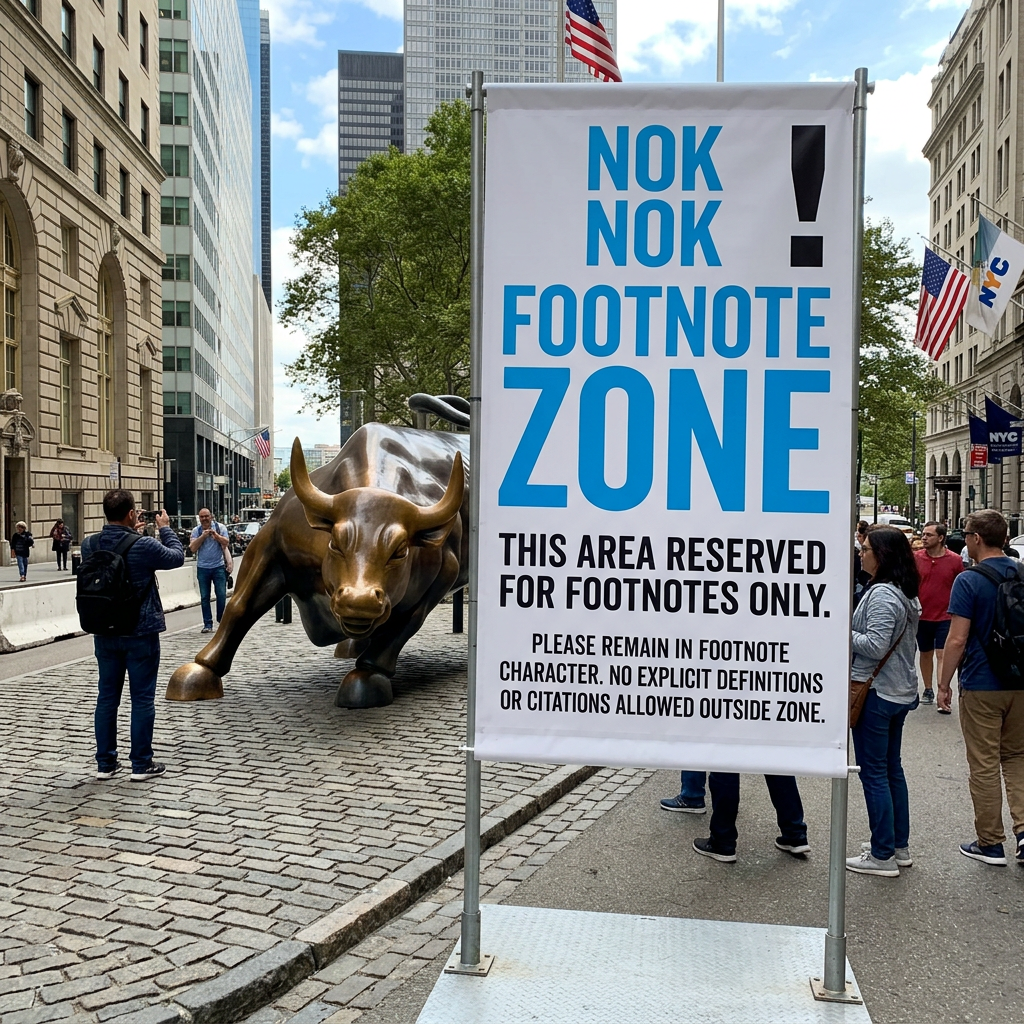
Footnote Zone for Law Firms Don’t Have a Lead-Generation Problem. They Have a Reply Problem
Disclosure: The diagnostic tools referenced below were developed by NokNok, a specialist in online responsiveness tool design.
Building on the 2025 Professional Services Client Journey Report from insight6 and Moneypenny – which mystery-shopped 134 law firms through 279 enquiries – this Footnote Zone uses NokNok’s four diagnostic tools to examine how weak digital handling, delayed replies and negligible follow-up can be identified and measured.
- Email Finder – Cause: The research found that web enquiries performed substantially worse than telephone enquiries, while the article identifies the additional risk created when firms rely on forms or generic contact routes and provide no visible direct email alternative. Cure: Email Finder scans a law firm’s website and related public-facing materials for published email addresses, then reports missing or obscured contact routes, abandoned addresses, inconsistencies between pages and other structural contactability gaps.
- Reply Radar – Cause: The insight6 research found weaker web response times and extremely limited follow-up: only 8% of web enquiries received a subsequent contact. An acknowledgement may also confirm technical receipt without establishing that a person has read or accepted ownership of the enquiry. Cure: Reply Radar deploys targeted test emails and quantitatively measures delivery outcomes, substantive reply rates, time to human response, follow-up behaviour and consistency across offices, practice areas and published addresses.
- Compliance Sniffer – Cause: A law firm can appear responsive while providing only an automated acknowledgement, an empty platitude or a generic instruction that fails to answer the prospective client’s question. These responses may create the appearance of activity without relevance, clarity or progress. Cure: Compliance Sniffer analyses incoming responses against objective quality, clarity, relevance, escalation and communication-compliance benchmarks, distinguishing a meaningful reply from an automated receipt or unhelpful holding response.
- Mystery Shopper – Cause: The article describes a potential end-to-end failure in which a person finds the firm, submits an enquiry and receives no meaningful ownership or follow-up. The message may be lost between the website, shared inbox, CRM, intake team and appropriate lawyer without management ever knowing that the opportunity existed. Cure: Mystery Shopper executes a comprehensive outside-in responsiveness audit, testing how a real prospective client experiences the firm’s contact options, form submission, acknowledgement, routing, human response, next-step guidance, follow-up and escalation pathways.
Disclosure: The diagnostic tools referenced in this Footnote Zone were developed by NokNok, a specialist in online responsiveness tool design. ReplyResearch may use NokNok tools, resources or analysis when preparing coverage, while retaining responsibility for its editorial decisions, including what topics to cover, what sources to cite and how stories are presented. Read the full ReplyResearch Collaborative Disclosure Policy.

Sources and relevant reading for Law Firms Don’t Have a Lead-Generation Problem. They Have a Reply Problem
- The Professional Services Client Journey Report 2025 – insight6 and Moneypenny, April 2025.
The principal research source for the article. Researchers mystery-shopped 219 professional-services firms through 430 enquiries, including 279 assessments involving 134 law firms. It supports the article’s findings concerning the disparity between telephone and web handling, the legal sector’s – 41 enquiry-stage Net Promoter Score, and follow-up rates of only 14% for telephone enquiries and 8% for web enquiries. It also explains the assumptions behind the modelled estimate that deficient enquiry handling could place £1.34 million in annual revenue at risk for a law firm receiving 100 enquiries per month. - Legal Firms Are Losing Millions! – insight6, 3 April 2025.
The accompanying legal-sector analysis from insight6 summarises the methodology and principal results of its research with Moneypenny. It reports that only 6.8% of the legal firms assessed delivered what the researchers classified as an exceptional enquiry experience. It also explains the estimated client value, conversion reduction and enquiry-volume assumptions used to calculate potential revenue leakage. - UK Legal Firms Lose Millions Annually Due to Poor Enquiry Handling – Legal Futures, 24 June 2025.
This legal-industry account provides additional coverage of the insight6 and Moneypenny findings. It highlights the 21-percentage-point performance gap between telephone and web enquiries and the very low rate of proactive follow-up. It is relevant to the article’s argument that law firms can invest in attracting prospective clients while losing them at the enquiry-handling stage. - AI-Powered Legal Practices Surge: Clio’s Latest Legal Trends Report Reveals Major Shift – Clio, 7 October 2024.
Clio’s separate secret-shopper research contacted 500 US law firms. Only 33% of firms contacted by email responded, while 40% answered telephone enquiries. Among email responders, only 18% supplied clear next steps or cost information. Although based on US firms, the findings independently support the article’s distinction between merely replying and providing a response that helps a prospective client progress. - Law’s New First Impression: Transforming Client Intake – American Bar Association, 1 March 2025.
This article considers the operational and cultural changes required to modernise legal-client intake. Drawing on Clio’s findings, it argues that firms need to combine technology, efficiency and human interaction. It relates directly to the article’s contention that automated receipt of an enquiry is not equivalent to meaningful human ownership. - Hennessey Digital’s 2025 Lead Form Response Time Study – Hennessey Digital and Legal Conversion Center, 2025.
This five-year US benchmark draws on more than 1,300 law-firm websites and approximately 150,000 data points. It found that 26% of firms did not respond to an online lead within seven days, while 25% responded in under five minutes. The findings reveal a widening divide between highly responsive firms and those that remain effectively silent, supporting the article’s focus on response speed, consistency and lost marketing value. - What Clients Want from Law Firms in 2026 – Law Firm Marketing Club, 2 April 2026.
Based on research involving 642 UK participants, this study examines how clients choose and experience law firms. It found that clients continue to value human reassurance while increasingly expecting convenient digital access. It also reports that confidence can deteriorate when an initially positive experience is followed by distant, inconsistent or inattentive communication. - 2025/26 Quarter 1 Complaints Data – Legal Ombudsman, covering 1 April–30 June 2025.
This regulatory evidence provides broader context for the consequences of inadequate legal-service communication. Poor communication and delay or failure to progress accounted for 49% of accepted complaint types, while poor communication remained the largest upheld complaint category. The data concerns instructed clients rather than initial sales enquiries, but it demonstrates that communication failures can continue beyond intake and develop into formal service and reputational problems.


