


 Richard Hall
A right to reach a human is no longer theoretical. New consumer rules show how contactability could reshape law, politics, business and culture.
On 3 July 2026, Ireland brought in new consumer-protection rules giving people the legal right to speak to a human instead of being forced to deal only with an automated chatbot when buying financial products.
The change applies to financial services sold online or over the phone, which means the kind of buying, renewing, cancelling and switching that now often happens through websites, apps, phone menus and automated systems.
At first, that may sound like a narrow update to financial-services law. But it may also be an early sign of something much bigger: the idea that reachability itself is becoming a protected expectation.
A business can have a chatbot, help centre, app, automated email and contact page, and still leave people with the same basic problem: they can’t reach anyone who can actually help.
What changed in Ireland
The new Irish rules implement updated EU protections for financial services contracts concluded at a distance. The EU directive was adopted in 2023 and amended the Consumer Rights Directive for remote financial services.
Irish reporting described the practical effect more plainly: consumers dealing with financial products can request a real person instead of relying solely on an automated chatbot.
The Central Bank of Ireland also says its Consumer Protection Code 2025 took effect on 24 March 2026, with updated protections reflecting how financial services are now delivered in a digital world.
So the immediate point is simple enough. Where a consumer is trying to deal with a financial service online or by phone, the route can’t just be an automated loop with no realistic way out.
This is bigger than customer service
It would be easy to treat this as a customer-service story about people getting annoyed with bots. That is part of it, but it undersells what may be happening.
When a legislature says people must be able to reach a human in certain digital financial journeys, it is not only regulating service quality. It is also drawing a boundary around automation.
That boundary matters because many organisations have started to treat contact as something that can be deflected, delayed, sorted, filtered or contained. The Irish change suggests there are limits to that approach.
If reachability becomes a right, even in limited settings, the question changes. It is no longer just “how efficient is the contact system?†It becomes “does this system preserve a person’s ability to get through?â€
The legislative consequence
Legislatively, this could become a template. Financial services may be only one of the first places where lawmakers decide that automated contact routes need a human alternative.
The same logic could move into energy, telecoms, housing, healthcare, benefits, insurance, transport, education and public administration. Those are all areas where people often have to deal with complex systems they cannot easily avoid.
The issue is not that every interaction needs a human from the start. The issue is whether people have a reliable way back to a person when the automated route fails, misunderstands, blocks or simply cannot resolve the issue.
Once that principle is accepted in one area, lawmakers may be asked why it should not apply elsewhere, especially where mistakes can affect money, housing, safety, health or legal rights.
The legal consequence
Legally, reachability may start to become part of what fair treatment means. The Central Bank of Ireland says its updated code aims to reflect how consumers access financial services today and to put customers’ interests into firms’ decision-making.
That matters because contact routes are no longer just operational details. They may become evidence of whether a firm has treated people fairly, explained choices clearly, supported vulnerable customers, or allowed people to exercise rights in practice.
A right that cannot be exercised through a working contact route is weaker than it looks. Cancellation rights, complaint rights, withdrawal rights and information rights all depend on being able to reach the organisation.
This is where the legal importance of contactability may grow. The route into the organisation could become part of compliance, not just part of customer experience.
The political consequence
Politically, reachability is closely tied to power. If we cannot get through to banks, insurers, utilities, platforms or public bodies, it becomes harder to question them, correct them, warn them or challenge them.
That may explain why a rule about chatbots can carry a larger political meaning. It speaks to a wider frustration with systems that appear open but leave people stuck at the edge.
People can usually sense the imbalance. The organisation knows the process, owns the data, writes the rules, controls the interface and decides when escalation is available. The person trying to get help often has none of that leverage.
In that setting, the ability to reach a human is not just a preference. It can become one of the few ways ordinary people can push back against institutional opacity.
The commercial consequence
Commercially, this changes the calculation around automation. For years, many firms have treated human contact as a cost to be reduced and self-service as a sign of digital maturity.
That model may become riskier if customers, regulators and courts start treating human access as part of the service. A buried phone number, looping bot or dead-end contact form may no longer look like efficiency.
It may look like a failure to provide the support needed for the product being sold. It may also become a reputational problem, because customers increasingly notice when digital convenience turns into digital obstruction.
The commercial winners may be firms that design contactability well: automation for simple tasks, clear escalation when needed, and human routes that are findable, staffed and able to get something done.
The cultural consequence
Culturally, this is part of a bigger shift in how people understand digital life. We were told that online systems would make services faster, easier and more available.
Sometimes they do. But many people have also learned the other side of digital service: endless menus, automated replies, chatbot loops, missing phone numbers and help pages that send us back to where we started.
That experience changes expectations. People are not only asking whether a service is online. They are asking whether anyone is still there when the online route breaks down.
If reachability becomes a cultural expectation, then “speak to a human†stops sounding old-fashioned. It starts sounding like a basic safeguard in systems that otherwise ask us to trust invisible decisions.
A reply is not the same as reachability
There is a difference between receiving an answer and being able to reach the organisation. An automated system can respond instantly, classify the issue, send a link, apologise for inconvenience and invite us to rephrase the question.
In a dashboard, that may look like a response. From our side, it may feel like being held at the edge of the service, especially if the issue keeps being reflected back without reaching anyone who can deal with it.
That difference matters because organisations can present automation as availability. The bot is always on, the help centre never closes, the app is in your pocket, and the automated reply arrives immediately.
But availability is not the same as reachability. If the route cannot understand, escalate or pass the issue to someone with enough context to act, the service may still fail when contact matters most.
The outside test
A useful test would be simple: can a person with an unresolved issue find the human route, use it, and reach someone who can move the problem on?
That test should matter more than the internal channel map. The question is not only what contact options the organisation says it provides. It is what happens when someone actually tries to use them.
This is especially important when the person is trying to cancel, complain, correct a mistake, report vulnerability, challenge a charge or stop something they did not mean to agree to.
Those are the moments when contactability is not a nice extra. It is part of whether rights, protections and promises can be used in real life.
What should change
Organisations should treat contact as part of the service, not an afterthought attached to it. That means automation needs an exit route, and that exit route has to be usable from the outside.
People should not need inside knowledge of the organisation’s systems to work out how to get through. They should not have to perform frustration in front of a bot before they are allowed to reach someone.
They should not have to repeat the whole story once they get there. And the human route should not exist only in theory, hidden behind unclear wording, long waits or teams without the power to act.
If reachability is becoming a right, then the practical question is not whether an organisation has a contact channel. It is whether that channel is backed by people, process and responsibility.
The real question
The Irish change is a legal development, but it is also a signal about expectations. Consumers are not only asking for speed. They are asking for a way through.
That expectation could reshape legislation, legal duties, political debate, commercial design and cultural norms around digital service. It starts with chatbots, but it does not end there.
The wider question is now hard to avoid: when organisations tell us to use a digital route, is there still a reliable way to reach someone who can actually help?
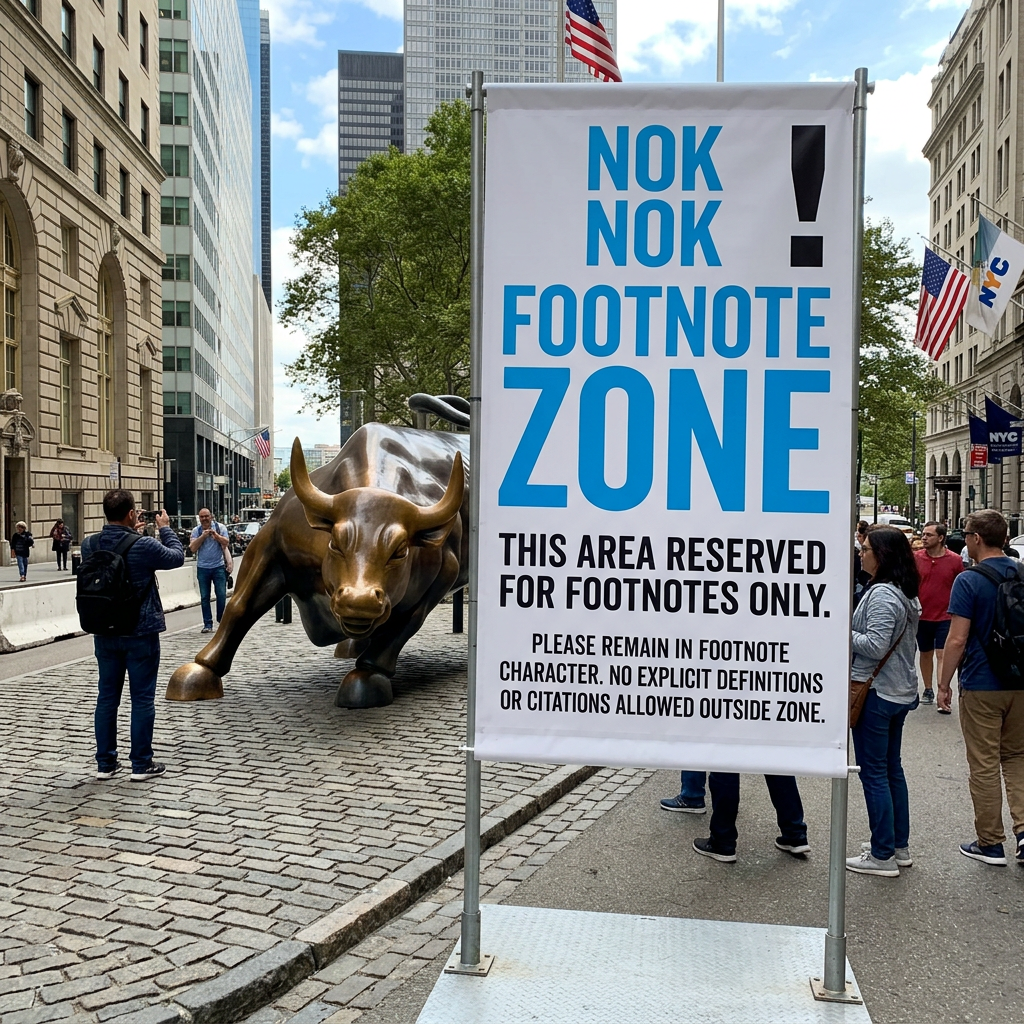
Footnote Zone for Reachability becoming a human right? It’s happening now, get ready
Disclosure: The diagnostic tools referenced below were developed by NokNok, a specialist in online responsiveness tool design.
This Footnote Zone uses NokNok’s diagnostic toolkit to examine how the reachability, escalation and human-contact risks described in this article can be identified, measured and addressed.
- Email Finder: The article argues that organisations can appear reachable while leaving people unable to find a route to someone who can actually help. Email Finder scans an organisation’s website and related public-facing materials for published email addresses, then reports structural deficiencies, discrepancies, missing contact routes and other contactability gaps.
- Reply Radar: The article warns that human access may exist in theory but fail in practice through long waits, ignored routes, delayed replies or under-resourced queues. Reply Radar deploys targeted test emails and quantitatively measures reply rates, latency, response consistency and related responsiveness benchmarks.
- Compliance Sniffer: The article highlights the risk that automated systems may respond quickly while failing to understand, escalate or deal with the issue in a way that supports legal, consumer or compliance expectations. Compliance Sniffer analyzes incoming responses for objective quality, clarity, relevance, escalation and compliance benchmarks.
- Mystery Shopper: The article’s central test is whether a person with an unresolved issue can find the human route, use it and reach someone able to move the problem on. Mystery Shopper executes a comprehensive end-to-end responsiveness UX audit, testing how a real user experiences the organisation’s contact, response and escalation pathways.
Disclosure: The diagnostic tools referenced in this Footnote Zone were developed by NokNok, a specialist in online responsiveness tool design. ReplyResearch may use NokNok tools, resources or analysis when preparing coverage, while retaining responsibility for its editorial decisions, including what topics to cover, what sources to cite and how stories are presented.

Sources and relevant reading for Reachability becoming a human right? It’s happening now, get ready
- RTÉ – “New legal right to speak to a human for finance consumers†– 3 July 2026.
This is one of the clearest news sources for the article’s opening episode. It reports that new Irish rules give consumers the legal right to speak to a person instead of an AI chatbot when buying financial products or services online or over the phone. - The Journal – “Consumers can request to speak to human instead of chatbot under new rules†– 3 July 2026.
This source supports the article’s claim that the change is not just about customer irritation with bots, but about a legally recognised route to human contact when buying financial products. - The Irish Sun – “New AI chatbot rules for Irish shoppers today…†– 3 July 2026.
This source is useful for the practical examples in the article, including car insurance and energy switching. It helps connect the legal change to everyday contactability problems that consumers actually experience. - EUR-Lex – “Directive (EU) 2023/2673…†– 28 November 2023.
This is the primary EU legal text behind the Irish change. It is relevant to the article’s legislative argument because it shows that the Irish rules sit within a wider EU move to update consumer protection for distance financial services. - Central Bank of Ireland – “Consumer Protection Code 2025†– took effect 24 March 2026.
This source supports the article’s legal and regulatory framing. The Central Bank says the updated code reflects how financial services are delivered in a digital world and how consumers access financial services today. - Central Bank of Ireland – “How the Consumer Protection Code Secures Your Interests†– 24 March 2026.
This source is useful for the article’s point that contact routes may become part of fair treatment, not merely operational design. It frames the modernised code as strengthening consumer protections in banks, insurance and other financial services. - The Guardian – “Virgin Media fined record £28m for stopping customers cancelling contracts†– 8 July 2026.
This source supports the article’s commercial and political argument. It shows how obstructive contact routes can become a major regulatory issue when customers cannot easily cancel or exercise rights in practice. - Financial Times – “Virgin Media fined £28mn for preventing customers from cancelling contracts†– 8 July 2026.
This source is relevant to the article’s point that reachability can affect legal rights, consumer protection and commercial risk. It reports Ofcom’s findings on cancellation barriers, transfers, hold times and repeated requests. - ITPro – “Yorkshire Building Society touts customer service gains with AI agents†– 7 July 2026.
This source gives balance to the article’s automation argument. It shows that AI can improve support operations, while also noting that Yorkshire Building Society keeps human supervision and says human support remains available. - SurveyMonkey – “Customer service trends & statistics for 2026: Why consumers still trust humans over AI†– 19 February 2026.
This source supports the cultural section of the article. SurveyMonkey reports that 79% of Americans prefer human customer service over AI, which helps explain why human access is becoming a wider expectation. - Metrigy – “85% of Consumers Prefer Interacting with Humans vs. AI Agents for Customer Service†– 18 February 2026.
This source adds further evidence for the article’s cultural and commercial claims. It reports that consumers are becoming more accepting of AI, but still overwhelmingly prefer human interactions for customer service. - AnswerConnect / PR Newswire – “AI Backlash Grows Across US, UK, and Canada†– 13 May 2026.
This source is relevant to the article’s argument that the issue is larger than one Irish legal change. It reports worsening attitudes toward AI customer service and growing demand for human support across three markets. - European Commission – “AI Act†– current EU policy page, checked 8 July 2026.
This source supports the article’s wider legal and legislative context. It shows that AI is increasingly being regulated through risk, trustworthiness and governance frameworks, which helps explain why human access and oversight are becoming more important. - arXiv – “AI Agents Under EU Law†– 6 April 2026.
This source supports the article’s argument that automated systems create wider compliance and accountability questions. It maps AI agents against EU legal obligations, including human oversight, transparency and sector-specific regulation. - arXiv – “Algorithmic Administration and the EU AI Act†– 24 March 2026.
This source is useful for the article’s political and public-sector implications. It discusses AI use by public authorities and the need for accountability, transparency and reviewability when automated systems affect public administration.


